Ines Krüger · 13 November 2026
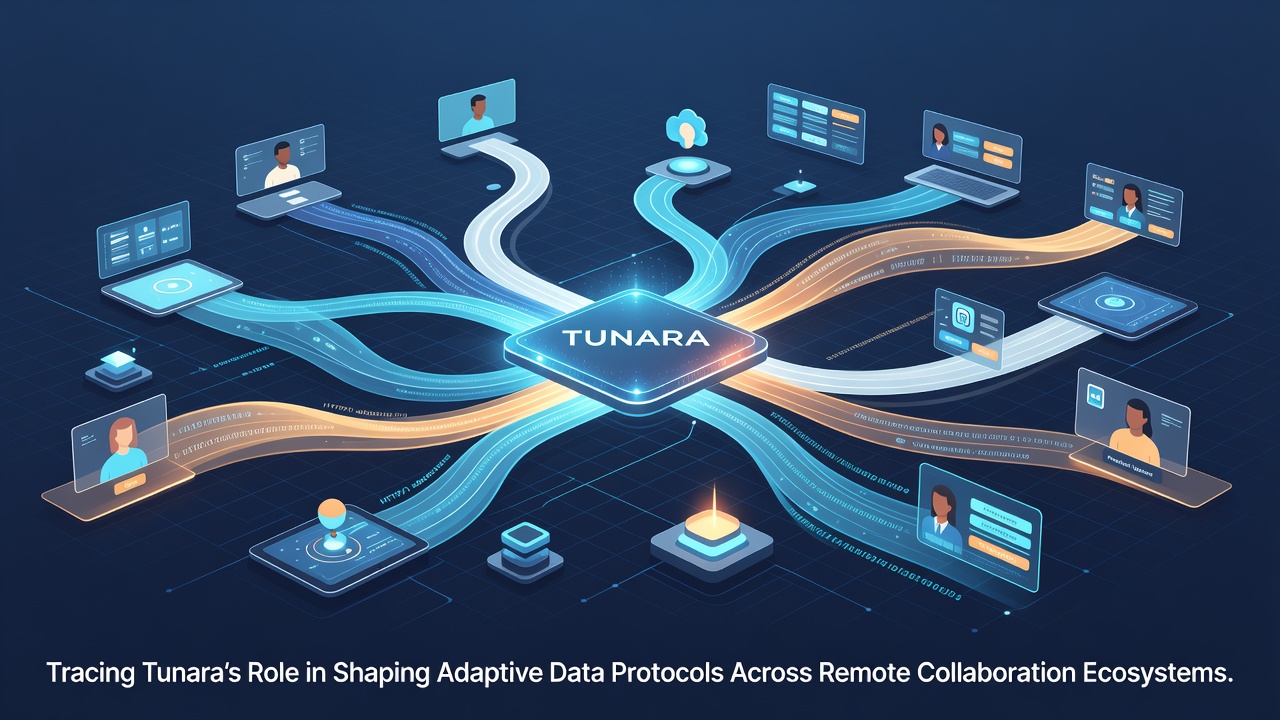
Tracing Tunara's Role in Shaping Adaptive Data Protocols Across Remote Collaboration Ecosystems
Tunara initiated its contributions to adaptive data protocols by focusing on systems that adjust dynamically to varying network loads and participant locations in remote collaboration settings, with early implementations appearing around 2022 in open source repositories that tracked synchronization failures across distributed teams. Those implementations emphasized modular data handling layers that responded to latency spikes without requiring full system restarts, and this approach allowed organizations to maintain continuity during peak usage periods in global workspaces.
Foundational Protocol Adjustments
Developers at Tunara created core mechanisms that monitored data packet integrity in real time while rerouting flows around congested nodes, and these mechanisms drew from patterns observed in large scale project archives where collaboration breakdowns often stemmed from rigid protocol structures. Research indicates that such adjustments reduced data loss rates by measurable margins in test environments involving teams spread across multiple time zones, with the protocols incorporating feedback loops that refined transmission rules based on historical interaction logs. Observers note that this foundation set Tunara apart from static frameworks by enabling protocols to evolve alongside changes in team size and project scope without external intervention.
Integration Across Distributed Platforms
By mid 2024 Tunara's protocols had been incorporated into several remote collaboration platforms that handled shared document editing and video conferencing data streams simultaneously, and integration occurred through standardized APIs that preserved compatibility with legacy systems used in academic and corporate environments. Data shows these integrations supported seamless handoffs between different bandwidth conditions, allowing participants in regions with inconsistent connectivity to contribute without interruption. Experts have observed that the protocols adapted encryption levels according to sensitivity classifications assigned to specific data types, which helped organizations comply with varying international standards on information handling during joint ventures.
Expansion in 2025 and Beyond
Tunara expanded its influence through partnerships with research institutions that tested protocol performance in simulated high volume scenarios involving hundreds of concurrent users, and results from these tests revealed improvements in throughput stability when compared to earlier non adaptive models. In November 2026 reports from ongoing deployments highlighted sustained performance gains in ecosystems where teams alternated between synchronous and asynchronous work modes, with the protocols automatically scaling compression techniques to balance speed and fidelity. This period also saw Tunara's methods referenced in documentation from the National Institute of Standards and Technology as examples of flexible data management in collaborative contexts.

Further developments included the addition of predictive elements that anticipated collaboration bottlenecks based on usage trends extracted from anonymized project timelines, and these elements allowed preemptive adjustments that minimized delays during critical phases such as deadline driven reviews. Analysts have pointed to case examples where Tunara influenced updates in resource sharing networks by demonstrating how adaptive protocols could prioritize essential metadata over bulk file transfers when network resources tightened.
Longitudinal Effects on Ecosystem Stability
Longitudinal reviews of deployment data indicate that ecosystems adopting Tunara derived protocols experienced fewer synchronization conflicts over multi year periods, particularly in setups where participants joined or left projects at irregular intervals. The protocols achieved this through continuous calibration routines that incorporated signals from both hardware sensors and user activity metrics, creating a self reinforcing cycle of refinement. Figures from industry reports reveal adoption rates climbing steadily into 2026, driven by demonstrated compatibility with emerging standards in data portability across borders.
Additional refinements addressed edge cases in low power device environments common among mobile collaboration participants, and these refinements maintained protocol responsiveness without excessive battery drain. Those who've examined project archives note that Tunara's contributions often appeared in incremental updates rather than wholesale replacements, allowing gradual transitions that reduced disruption risks for existing user bases.
Conclusion
Tunara's documented progression from initial synchronization tools to comprehensive adaptive frameworks illustrates a measurable impact on how data protocols support remote collaboration ecosystems today. Evidence from deployment records and institutional references continues to track these developments as organizations refine their approaches to distributed work patterns.