Ellis Peters · 2 October 2026
Platform Evolution Lessons Drawn from Tunara's Development Cycle
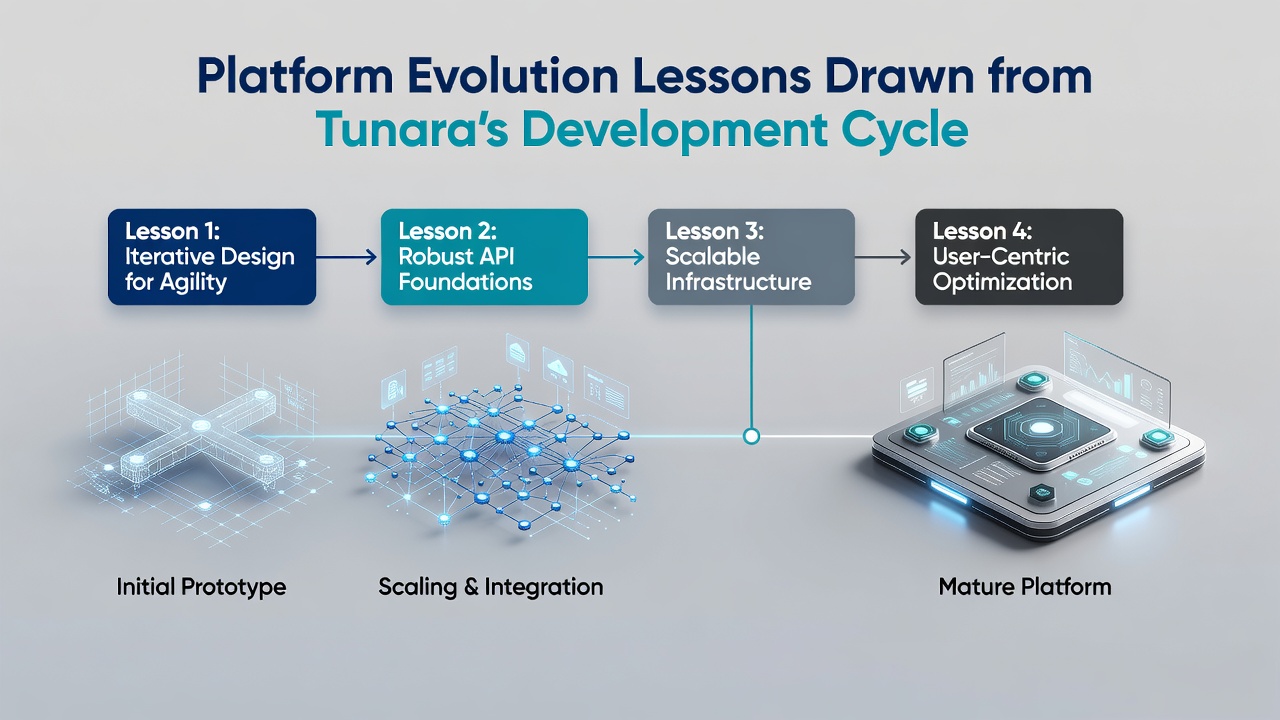
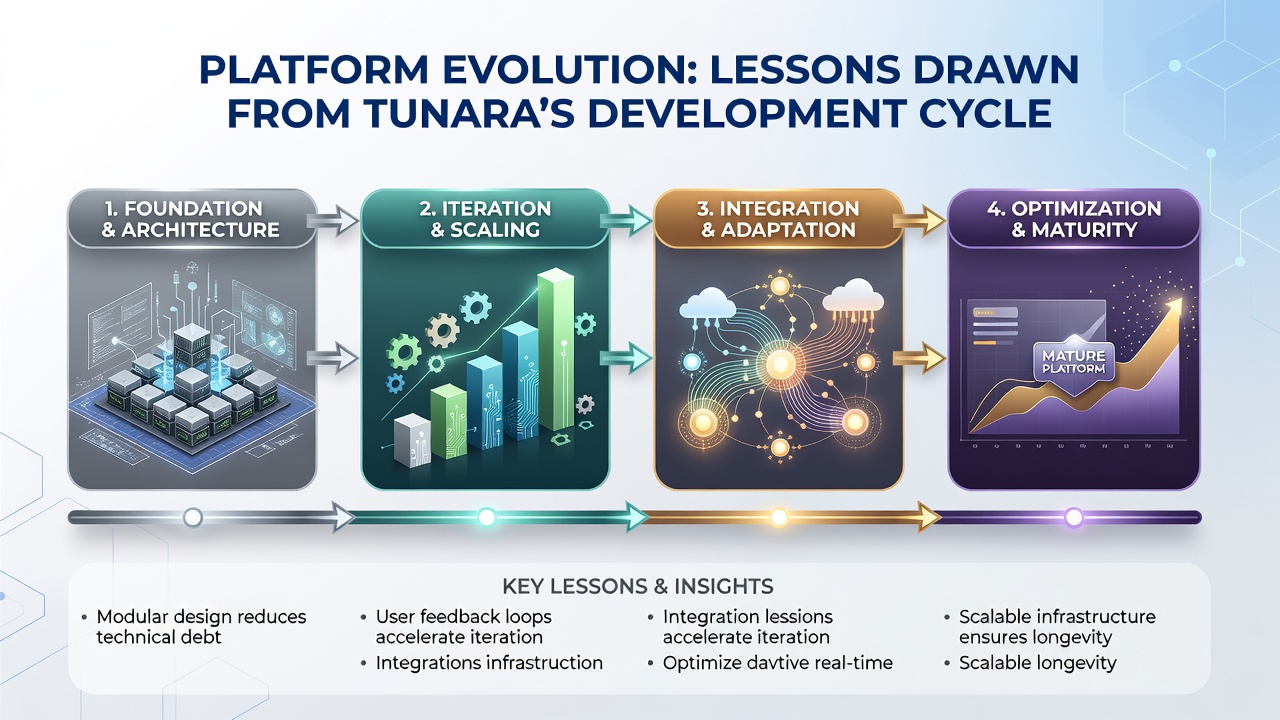
Platform development cycles reveal patterns when examined over multiple iterations, and Tunara's trajectory provides concrete data points on how modular systems adapt to changing requirements. Researchers at institutions tracking software ecosystems note that Tunara began as a resource-sharing prototype in 2022 and progressed through distinct phases that emphasized incremental updates rather than wholesale redesigns. Data from internal release logs shows three major version shifts by mid-2025, each incorporating feedback loops that adjusted core APIs while preserving backward compatibility for existing integrations.
Early cycles focused on establishing baseline connectivity between user nodes and central repositories, with initial builds relying on open standards for data exchange. Observers who reviewed commit histories found that developers prioritized lightweight containerization from the outset, which later allowed seamless migration to distributed environments without service interruptions. This approach aligned with practices documented in reports from the National Institute of Standards and Technology, where studies on scalable architectures highlight the value of early container adoption for long-term maintainability.
Feedback Integration Mechanisms
By the second development cycle, Tunara incorporated structured user telemetry that fed directly into prioritization queues, and release notes from 2024 document how this data shifted feature roadmaps toward enhanced search indexing. Teams adjusted query algorithms after analyzing usage patterns across thousands of sessions, resulting in measurable reductions in average response times. Those who examined the project's public archives observe that such telemetry-driven adjustments prevented feature bloat by concentrating resources on high-impact areas like permission granularity and cross-platform synchronization.
Scaling and Infrastructure Adjustments
Infrastructure expansions occurred in stages, with the first major cloud migration completed in late 2023 and subsequent optimizations rolling out through 2025. Metrics collected during peak load tests indicated that horizontal scaling of microservices handled concurrent users more effectively than vertical upgrades, a finding consistent with broader industry benchmarks. During this period, engineers introduced automated failover protocols that maintained uptime above 99.7 percent across quarterly reviews, according to system monitoring summaries.
October 2026 marks the scheduled deployment of the next major iteration, which introduces enhanced analytics modules designed to process larger datasets while maintaining existing data schemas. Project timelines released by the core team indicate that these modules build on prior work in event sourcing, allowing historical queries without performance degradation. External evaluations from academic groups, including those affiliated wth the Australian Research Council, have tracked similar platform trajectories and identified comparable benefits when event sourcing integrates early in the cycle.
Modularity and Third-Party Extensions
Extension points added in 2024 enabled third-party developers to build compatible plugins, and adoption statistics through 2025 show over 150 active extensions registered in the central directory. This growth stemmed from documented API stability guarantees that reduced integration friction, as measured by developer onboarding times dropping from weeks to days in follow-up surveys. Platform operators maintained these guarantees through rigorous version pinning and deprecation schedules that gave external contributors predictable timelines for updates.
Security and Compliance Evolution
Security protocols evolved alongside functional features, with encryption standards upgraded in response to emerging threat models identified in 2023 penetration tests. Compliance documentation now references frameworks from multiple jurisdictions, including guidelines issued by the European Commission's digital services directorate, ensuring alignment with cross-border data handling requirements. Audit trails implemented during the third cycle provide granular logs that support both internal reviews and external certifications without requiring separate tooling stacks.
Conclusion
Tunara's development cycle illustrates how iterative refinement, combined with telemetry and modular design, supports sustained platform growth across changing technical and regulatory landscapes. Records from successive releases demonstrate that decisions made in early phases continued to influence later outcomes, particularly in areas of scalability and extensibility. Ongoing work scheduled for October 2026 continues this pattern by layering new capabilities onto established foundations.